


CASE STUDY
Cracking The Capsule
Predicting Formulation Behaviour with the Aelius MuCo Digest Model
The Background
Ibuprofen is a widely used non-steroidal anti-inflammatory drug (NSAID) typically used to relieve pain, reduce inflammation and treat fever. There are several generic formulations of ibuprofen designed for oral delivery. These include the standard immediate-release 200 mg film-coated tablets and sustained-release formulations encased within a gelatine capsule. Immediate release formulations are designed for rapid onset, while sustained-release formulations aim to provide “longer lasting relief” as the formulation is designed to slowly release ibuprofen in the digestive tract and prolong therapeutic plasma concentrations.

Structure of Ibuprofen
The Problem
A persistent challenge in oral drug development is the reliable prediction of how formulation design influences in vivo drug release and availability for absorption. Conventional dissolution methods offer standardisation but often lack physiological relevance to the human gastrointestinal (GI) tract, particularly in terms of pH transitions, enzymatic activity, and the presence of whole bile.
The Solution: MuCo Digest
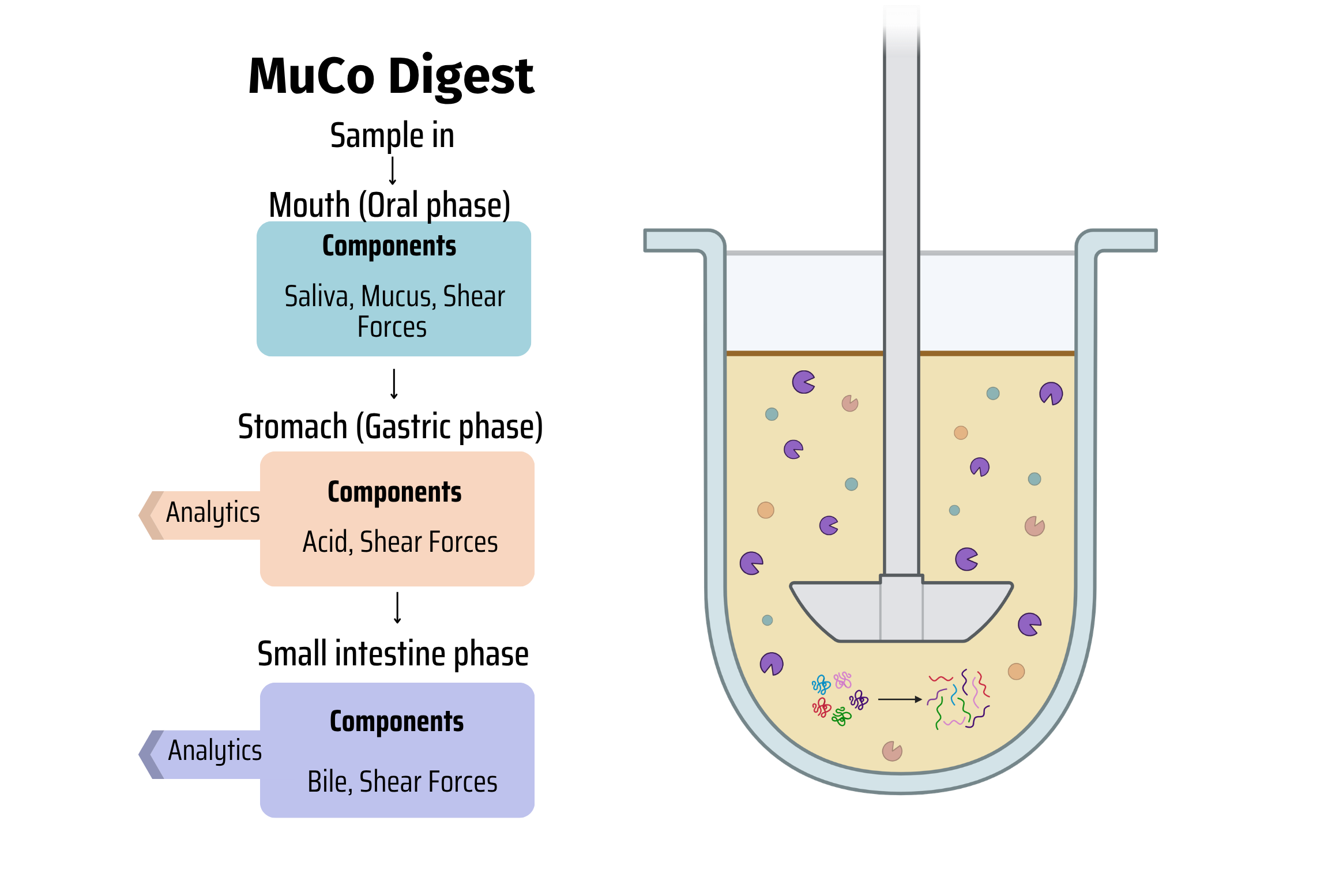
Aelius Biotech's physiologically relevant in vitro MuCo Digest model address this gap by recreating key features of the GI environment, including dynamic pH changes, digestive enzyme secretions, and biorelevant media composition including whole bile. This system reproduces the sequential stages of the digestive process, from the mouth through to the end of the small intestine, allowing formulators to investigate how dosage forms behave under conditions that more closely resemble human digestion. This case study uses two contrasting ibuprofen formulations (sustained and immediate release) to demonstrate the model’s ability to:
- Differentiate release mechanisms
- Understand digestive phase dependent dissolution behaviour
- Support formulation screening and product optimisation
The Method
Aelius Biotech’s full scale fasted-state MuCo Digest model was used to replicate the ingestion of one ibuprofen tablet/capsule (containing 200 mg ibuprofen) along with a glass of bottled water (250 mL).
5 mL simulated saliva and 250 mL water were added to the digestion vessel with continuous agitation. The tablet/capsule was added to the vessel, followed immediately by gastric juice (50 mL), replicating the tablet being swallowed along with a glass of water. This initiated the time course acting as T0 min. Gastric secretions were pumped in at a rate of 0.5 mL/min replicating the continuous gastric secretions that occur after ingestion. After 60 minutes whole porcine bile (13.5 mL) and simulated pancreatic juice (45 mL) were added, replicating gastric emptying into the start of the duodenum (the first section of the small intestine). Pancreatic secretions were pumped in at a rate of 0.5 mL/min to simulate passage of the formulation through the small intestine to the end of the ileum. At T180 min, the secretions were stopped and the model was allowed to run for another 5 hours at a fixed volume to observe the extended release profile. Samples (0.5 mL) were taken at T0, T15, T30, T60, T61, T75, T90, T120, T150, T180, T300, and T480 minutes. Samples were processed to isolate the soluble analyte component only and analysed by HPLC to quantify the levels of bioaccessible ibuprofen at each timepoint.
The Results
The immediate release formulation showed limited solubility in the acidic gastric phase, with a spike in solubility observed as the formulation transitioned into the small intestinal phase, where the pH increase and bile helped to solubilise the ibuprofen. The quantity of ibuprofen in solution continued to rise steadily until T180 min where secretions were then stopped. The amount of soluble ibuprofen in the system remained stable at around 125 mg as the volume was held for the final 300 minutes, indicating that ibuprofen had reached its solubility limit.
By contrast, the sustained-release formulation showed a distinctly different dissolution profile. A much slower, controlled and gradual release of ibuprofen into solution was observed. Very little ibuprofen was released during the gastric phase, followed by a steady increase in dissolution throughout the 120-minute small intestinal passage. After completion of the small intestinal transit, ibuprofen continued to be released from formulation into solution throughout the extended hold phase, reaching a final soluble level of 82.1 mg at T480 min whilst still increasing.
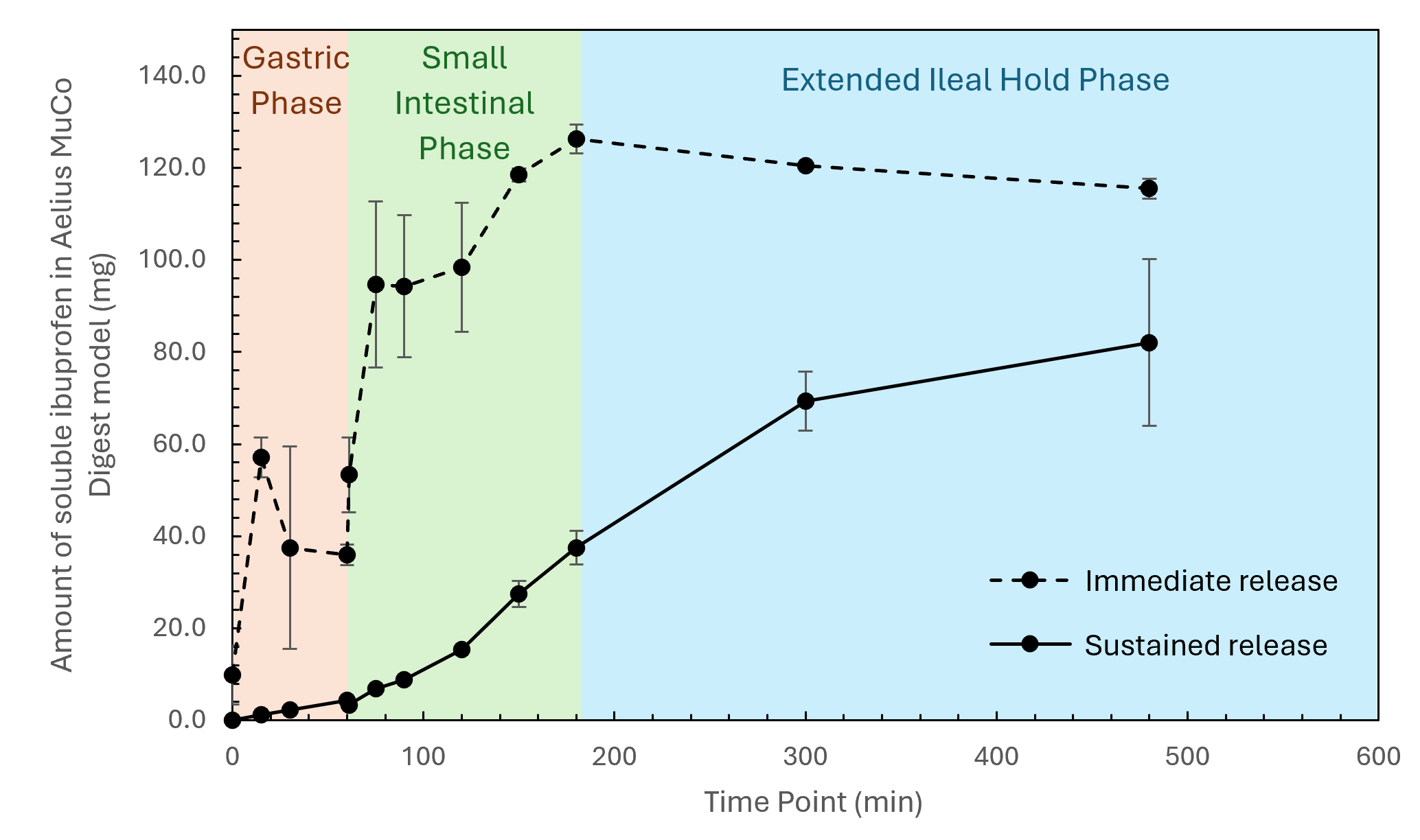
Figure 1: Amount of soluble ibuprofen present in the Aelius MuCo Digest over a 480-minute time course for a standard coated ibuprofen tablet and a slow-release ibuprofen formulation. The y-axis shows the amount of ibuprofen present in the MuCo Digest model expressed in mg. The x-axis shows the time point in minutes. The dashed line represents the standard ibuprofen tablet. The solid line represents the slow-release formulation. Samples were taken at 0, 15, 30, 60, 61, 75, 90, 120, 150, 180, 300, and 480 minutes. Error bars on points show the standard deviation of the mean value. Significantly more soluble ibuprofen was observed for the standard coated tabled between T15 and T480. No significant difference was observed between the two formulations at T0.
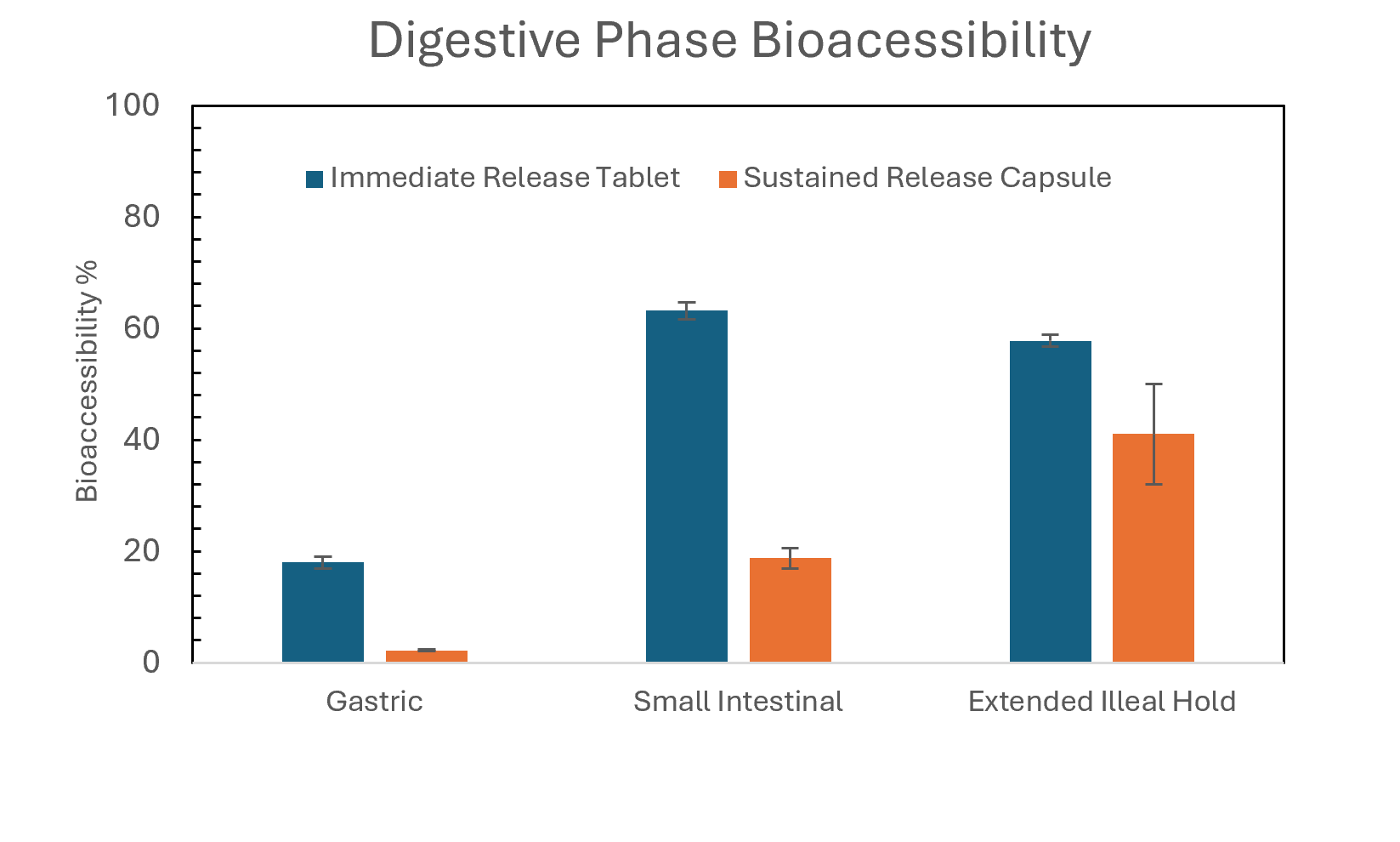
Figure 2: Comparison of the percentage of the original dose in solution and available for absorption (bioaccessibility %) at end of each stage of the digestive tract (T60, T180 and T48 min) for the immediate release formulation vs the sustained release formulation.
The Conclusion
The immediate-release formulation reached peak solubility rapidly, whereas the sustained-release form continued to release ibuprofen throughout the course of the experiment, never reaching maximum solubility. Physiologically relevant conditions, particularly the transition from acidic gastric to near-neutral intestinal pH, play a significant role in ibuprofen solubility, given its weakly acidic nature (pKa ≈4.9). The presence of bile salts in the intestinal medium may further improve solubilisation through micelle formation.
Aelius Biotech's fasted MuCo Digest model was able to compare compound release from formulations under simulated gastrointestinal conditions. This physiologically relevant digestion model provides insights beyond standard dissolution testing, supporting better prediction of in vivo performance. By combining this model together with Aelius MuCo Absorb it is possible to replicate the absorption dynamics and quantify the ability of a formulation to improve the absorption of a bioactive compound.
Get Biorelevant Data Early
Test your formulations in physiologically relevant conditions before committing to clinical studies
Speak to an Expert